Tu pedido

Agotado
Agotado en la editorial
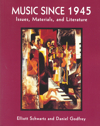
This text presents a challenging and comprehensive survey of the music of the postwar periods. Written in a concise and engaging style, the authors encourage students to re-examine aesthetic assumptions and cultural biases as they explore the rich diversity of music in our time.
A survey of the music of the postwar period, exploring a diversity of music from an international perspective. Integrating music theory and music history, this book concentrates on: pitch logic; process; texture; sound colour; time; performance ritual; parody/historicity; notation; and technology.
CONTENIDO:
Preface
Acknowledgments
Introduction
Part I. Precedents, influences, and early postwar trends
1. Composers and audiences
2. Precedents and influences: Music from 1890 to 1945
- Music from 1890 to 1920
- Music from 1920 to 1945
- Prophetic factors anticipating post-1945 developments
- Four works composed before 1945
3. New ways of listening: The "Loudspeaker revolution"
- Changes in listener perception
4. New concepts and tools
- Seven concepts for the study of new music
- Two compositional tools
- A perspective on new approaches
5. The early postwar years
- Social contexts for stylistic change
- The influence of Webern and Messiaen
- The growth of integral serialism
- Other postwar directions
- Styles in trasition
6. Pieces for study I
- Karlheinz Stockhausen: Kreuzspiel (1952)
- Elliot Carter: Sonata for flute, oboe, cello, and Harpsichord (1952)
- Lukas Foss: Time Cycle (1959)
- Igor Stravinsky: Agon (1957)
- John Cage: Sonatas and interludes (1948) and music of changes (1951)
- Benjamin Britten: The turn of the screw (1954)
Part II. New aesthetic approaches
7. "Order" and "Chaos"
- A brief look at the twelve-tone set
- "Order"
- "Chaos"
- Intermediate positions between "order" and "chaos"
- Similarities between the philosophies of "chaos" and "order"
- Process and texture
8. The electronic revolution I: Tape composition and early synthesizers
- Precedents
- Music and noise: Expanding Philosophies
- The first major developments
- Electronic music comes of age
- Conclusion: Looking ahead
9. Multimedia and total theater
- The extended performer
- Electronics in live performance
- Sound and sight
- Music and movement
- Audience participation
- Musicians as actors, music as polemic
- Toward total theater
- Conclusion
10. Texture, Mass, and Density
- Precedents
- Texture and instrumental color
- Texture and process
- Sound mass: variable density and complexity
- Conclusion
11. Non-western musical influences
- Embracing sounds from other cultures
- Ritual and function
- Conclusion
12. Pieces for study II
- Krzysztof Penderecki: Threnody for the victims of Hiroshima (1960)
- Milton Babbitt: Vision and prayer (1961)
- Mario Davidovsky: Synchronisms No.1 (1963)
- John Cage and Lejaren Hiller: HPSCHD (1969)
- Peter Maxwell Davies: Eight songs for a Mad King (1969)
- George Crumb: Ancient voices of children (1970)
- Peter Schat: To you (1972)
- Pierre Boulez: Rituel in memoriam Bruno Maderna (1974)
Part III. More recent developments
13. Collage and quotation
- Precedents and influences
- Collage
- Style juxtaposition and quotation
- Conclusion
14. The resurgence of tonality
- Revisiting the past
- Creating new languages with "old" materials
- Melding past and present
- Tonality and serialism
- Simplicity, stasis, and slow motion
- The real vanguard of modern tonality
- Conclusion
15. New views of performance: space, ritual, and play
- Components of performance
- Ritual
- Play: Music as "Game"
16. Process and minimalism
- Processes, inaudible and audible
- Different approaches to minimalism
- Minimalism techniques
- Minimalist composers: the earliest generation
- The middle and younger generation of minimalists
- Conclusion
17. The electronic revolution II: Computers and digital systems
- Analog versus digital
- The discovery of computer music
- Music from the mainframe
- Interactive digital composition and performance
- Acoustics versus digital sound: A vanishing boundary
- Future developments
18. Pieces for study III
- Lukas Foss: Baroque variations (1967)
- Harrison Birtwistle: Punch and Judy (1967)
- Luciano Berio: Sifonía (1968-69)
- Mauricio Kagel: Staatstheater (1970)
- Tom Johnson: Failing (1976)
- David del Tredici: Final Alice (1976)
- Paul Lansky: Six Fantasies on a poem by Thomas Campion (1978-79)
- Laurie Anderson: "O Superman" (1981)
- Helmut Lachenmann: Mouvement (-vor der Estarrung) (1984)
- Henry Brant: Bran(d)t aan de Amstel (1984)
Part IV. Issues and directions
19. Notation, improvisation, and composition
- Functions of notation
- Improvisation
- Composition
20. Composers and national traditions
- Scandinavia
- Eastern Europe
- Japan
- The Netherlands
- Latin America
- England
- Canada
21. Pieces for study IV: a panorama of works by genre
- Opera
- Concerto
- Chamber music
- Orchestral music



Disponible en breve
Sin stock. Si se pide hoy, se estima recibir en la librería el 20/02/26
Disponible
SÓLO 1 EN STOCK - dato actualizado el 12/02/26 a las 23:06¡GASTOS DE ENVÍO GRATIS!
Disponible en breve
Sin stock. Si se pide hoy, se estima recibir en la librería el 16/02/26¡GASTOS DE ENVÍO GRATIS!
Disponible en breve
Sin stock. Si se pide hoy, se estima recibir en la librería el 17/02/26¡GASTOS DE ENVÍO GRATIS!
Disponible en breve
Sin stock. Si se pide hoy, se estima recibir en la librería el 16/02/26¡GASTOS DE ENVÍO GRATIS!