Tu pedido

Impresión bajo demanda
Disponibilidad sujeta a la información del editor¡GASTOS DE ENVÍO GRATIS!
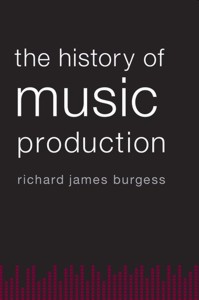
Richard James Burgess draws on his experience as a producer, a musician, and an author in this history of recorded music, which focuses on the development of music production as both art form and profession. This comprehensive narrative begins in 1860 with the first known recording of an acoustic sound and moves chronologically through the twentieth century, examining the creation of the market for recorded sound, the development of payment structures, the origins of the recording studio and those who work there, and, ultimately, the evolution of the recording industry itself. Burgess charts the highs and lows of the industry through the decades, ending with a discussion of how Web 2.0 has affected music production. The focus remains throughout the book on the role of the music producer, and Burgess offers biographical information on key figures in the history of the industry, including Fred Gaisberg, Phil Spector, and Dr. Dre.
Undergirding Burgess's narrative is the argument that while technology has historically defined the nature of music production, the drive toward greater control over the process, end result, and overall artistry came from producers. In keeping with this unique argument, "The History of Music Production" incorporates clear yet in-depth discussion of the developmental engagement of technology, business, and art with music production. Burgess builds this history of music production upon the strongest possible foundation: the key transitions, trends, people, and innovations that have been most important in the course of its development over the past 136 years. The result is a deeply knowledgeable book that sketches a critical path in the evolution of music production, and describes and analyzes the impact recording, playback, and disseminative technologies have had on recorded music and music production. Central to the field and a key reference book for students and scholars alike, it will stand as a companion volume to Burgess's noted, multi-edition book "The Art of Music Production".
CONTENIDO:
Preface
Introduction
1. Beginnings
-Understanding Sound
-Toward Recording
-The Phonograph
-The First Producers
2. The acoustic period
-Acoustic Recording
-International Expansion
-The Third Major Label
-The Sooys
-Documentation of Cultural Expression
-The End of an Era
3. The Electric period
-Toward Electric Recording
-Better Sound
-Country Music
-Further Technological Foundations
-The Calm before the Storm
-The Thirties and Forties
-Radio, Film, and Tape Innovations
4. Economic and Societal Overlay
-Cyclical Decline
-One Thing after Another: The Thirties through the War
-Recovery
5. The Studio is Interactive
-Toward Greater Control
-Magnetic Tape Recording
-Defining Some Terms
-Mastering
-Editing
-Sound on Sound
-Overdubbing
-Summing up of Tape's Impact
-The Microgroove LP
6. The Post World War II Reconstruction of the Recording -Industry
-After the War
-The Boom in Independent Labels
-The Fifties
-Radio DJs
7. Mobile Music
-More Music for More People
-Music Anywhere: Radio on the Move
-My Music on the Move
-My Music Anywhere
8. Expanding the Palette
-Electric Instruments and Amplifiers
-Synthesizers
-Genre Hybridization
9. Some Key Producers
-The Objective
-Review of Early Producers
-Mitch Miller
-Leiber and Stoller
-Phil Spector
-Sam Phillips
-Steve Sholes
-Norrie Paramor
-Joe Meek
-Brian Wilson
-George Martin
-Holland, Dozier and Holland
-Teo Macero
-King Tubby
-Prince
-Rick Rubin
-Quincy Jones
-Robert John "Mutt" Lange
-Dr Dre
-Max Martin
10. The Sixties and Seventies
-Cultural and Creative Revolution
-The Sixties
-Mix Automation
-The Seventies
11. Toward the Digital Age
-Digital Recording:
-Hip Hop
-The State of the Eighties
-The Sound of the Eighties
-The Look of the Eighties
-Shiny Silver Discs
-Singles
-Mixing
-Dance Music
-Remixes
-Further Eighties Developments
-Mergers and Acquisitions
-The Internet and the World Wide Web
12. The Nineties
-The Corporate State
-The Charts and SoundScan
-Alternative Rock
-Toward Music Online
-Progress with Digitized Data
-Digital Radio
-Millennials
-Preparing the way for Napster
13. Periods of standards and stability
-Proprietary versus Open Systems
-Standards
14. Deconstructing the Studio
-Democratizing Technologies
-Improvised Environments
-When is a Home not a Home?
-Freedom
15. Random Access Recording Technology
-Why Random Access?
-The Beginnings of Random Access for Producers
-Drum Machines, Next Generation Sequencers and MIDI
-The Beginnings of Random Access Digital Recording
-Convergence and Integration
16. Transformative/Disruptive Technologies and the Value of Music
-Definitions of Terms
-The Industry at the Turn of the 21st Century
-Missed Opportunity
-Oh wait
-No Big Surprises
-What a Great Idea
-What Happened to Vertical Integration?
-An Idea Whose Time Had Come
-Denial and Inaction
-The Consequences
-The Digital Disruption and Producer Income
-Performance Royalties
-Direct versus Statutory Licenses
17. Post-Millennial Business Models
-American Idol
-Downloads
-Streaming Audio
-Non interactive streams
-Streaming on demand
-Web 2.0, Social Networking and Social Media
-Commonalities
18. The Unfinished Work
-Sampling, Mash-ups and Remixes
-Using Records as Raw Material
-Disco
-Hip hop
-Adapting compositions
-Adapting Recordings
-The Question of Creativity
-The Question of Legality
Conclusion
About the author



Impresión bajo demanda
Disponibilidad sujeta a la información del editor¡GASTOS DE ENVÍO GRATIS!
Disponible
SÓLO 1 EN STOCK - dato actualizado el 21/02/26 a las 23:05¡GASTOS DE ENVÍO GRATIS!


Bajo pedido
Sin stock. Si se pide hoy, se estima recibir en la librería el 06/03/26¡GASTOS DE ENVÍO GRATIS!

Disponible en breve
Sin stock. Si se pide hoy, se estima recibir en la librería el 24/02/26¡GASTOS DE ENVÍO GRATIS!

Bajo pedido
Sin stock. Si se pide hoy, se estima recibir en la librería el 02/03/26¡GASTOS DE ENVÍO GRATIS!