Tu pedido

No disponible temporalmente
Disponibilidad sujeta a la información del editor
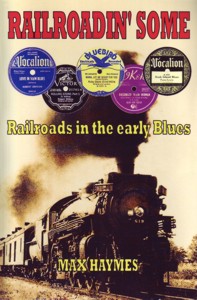
This groundbreaking book, written by one of the foremost blues historians in the UK, is based on over 30 years research, study and absolute passion for early blues music. It is the first ever comprehensive study of the enormous impact of the railroads on 19th and early 20th Century black American society and the many and varied references to this new phenomenon in early blues lyrics.
CONTENIDO:
Chapter 1: smokestack is black an? the bell it shine like gold
- Brief background of railroads in the antebellum era and slaves? involvement
- role of Pullman and Red Cap porters
- the Panama Limited
- origins of ?smokestack lightning? and Charley Patton
- ?ticket as long as my right arm?, ?ballin? the jack?
- the ?other? Midnight Special
- Texas & New Orleans RR and Lucille Bogan
Chapter 2: Skippin? 'round from log to log
- Evolution of logging camps in the South
- origins of piano blues, boogie woogie and the barrelhouse
- oral transmission of early blues via logging roads
- more on the T&NO.
Chapter 3: Ah! when i leave from here, gonna catch that M. & O.
- The story of the Mobile & Ohio and the blues from 1852 to 1940; a ?journey? from Mobile to St. Louis
- background of the floating bridge of Sleepy John Estes fame
- Cairo, Ill.
- the real facts of Casey Jones? train wreck in 1900
- river bottoms
- the Union Stockyard in Meridian, Miss.
- oral transmission and (a) way freight trains on the M&O, (b) stevedores at Mobile Bay
Chapter 4: She?s givin? it away
- Short history of the refrigerator car or ?reefer? from 1858 to 1910
- introduction of the banana to the ?masses? in the black community
- fast freights: the ?redball? and the ?hotshot?
- hoboing on a reefer with T-Bone Walker and David ?Honeyboy? Edwards
- sexual symbolism and street market blues
- English music hall link with some early vaudeville-blues singers.
Chapter 5: Goin? where the southern cross the yellow dog
- Origins of the ?Yellow Dog?
- short history of the Yazoo & Mississippi Valley RR
- peavine railroads
- brief survey of labour history and anti-union railroad companies
- yellow dog contracts
- recordings of the Yellow Dog from 1923 to 1961, by Sam Collins, Bessie Smith et al
Chapter 6: An? that thing don?t keep a-ringin? so soon
- Brief study of early Southern prison/correction systems
- convict lease and railroads? involvement
- source of the ?longest train? motif in the blues
- origin of ?In The Pines?
- Joseph E. Brown and Peg Leg Howell
- brief survey of the Tennessee Coal, Iron & Railroad Co. or ?TCI?, and singers
- Railroad Bill and the L&N
- short history of Gulfport & Ship Island RR and Robert Johnson link
- the ?ding dong? and Frank Stokes
Chapter 7: Runnin? down to the station
- Resumé of beginnings of the Fast Mail in 1875
- importance to rural South
- source of John Byrd?s ?Billy Goat Blues? in the 1850s
- fast mail trains such as the Big 80 and the Sunnyland
- lineage of Robert Johnson?s ?fastest train I see? verse
- streamline trains
- blues singers? knowledge of railroad operations
- the railroad depot: the seamier side and the ?leaving scene? in the blues, as related by Robert Wilkins, Roosevelt Sykes, Ma Rainey and Robert Johnson
Chapter 8: I carried water for the elephant
- Short history of development of circus and carnival in the South
- beginnings of medicine shows
- circuses in Natchez, Miss. during antebellum era and the early minstrel song, ?Billy Barlow?
- excursion trains
- blues singers? role in circus and origin of ?ballyhoo?
- circus and carnival slang used in the blues
- role of steam calliope
- short survey of origin of ?hokum? and hokum blues
- the railroad crossing
- vaudeville-blues singers and travelling shows including Clara Smith
- oral transmission process
Chapter 9: Gonna leave a pullman an? ride the L. & N.
- Vaudeville blues lyrics and influence on rural singers like Blind Lemon Jefferson by Sippie Wallace, Ida Cox and others
- oral transmission and the blues record
- passenger train women, platform vendors and Blind Boy Fuller
- survey and ancestry of ?Careless Love?
- Mae Glover, John Byrd, Bobby Grant and Buddy Boy Hawkins
- roots of ?Statesboro Blues? by Blind Willie McTell
Chapter 10: Lined out smokin', look like it takin' to scat
- Short survey of early tramps and hobos on the rails
- women hobos and Memphis Minnie
- Chicago, the railroad hobo?s ?Mecca?
- hobo jungles and ?Hoovervilles?
- symbolism of the railroad and ultimate freedom for the hobo
- The Atlanta Special, Bukka White and Blind Willie McTell
- riding the blinds and riding the rods
- railroad police and Sleepy John Estes
- origins of ?hobo?
Epilogue
Appendix I - Origins of 'red light district'
Appendix II - 'In The Pines'/'The Longest Train' and the "accident stanzas"
Glossary of Railroad Abbreviations and Nicknames
Index of Artists' Names
Index of Song Titles
General Index
Additionally, there is a fully annotated Discography at the end of each chapter


Bajo pedido
Si se pide hoy, se estima recibir en la librería el 02/03/2026¡GASTOS DE ENVÍO GRATIS!

Disponible
SÓLO 1 EN STOCK - dato actualizado el 19/02/2026 a las 20:04¡GASTOS DE ENVÍO GRATIS!
Disponible en breve
Si se pide hoy, se estima recibir en la librería el 23/02/2026¡GASTOS DE ENVÍO GRATIS!
Disponible en breve
Sin stock. Si se pide hoy, se estima recibir en la librería el 24/02/26¡GASTOS DE ENVÍO GRATIS!